
Year-End Money-Saving Tax Strategies for Dental Practice Owners
As 2026 comes to a close, many dental practice owners are looking for ways to reduce their tax liability and make smart financial decisions before year-end. With proactive planning, there may still be opportunities to lower your 2026 tax bill while positioning your practice for a strong start to 2027.
Here are five tax-saving strategies dental practice owners should consider before December 31, 2026.
This post is brought to you by Duckett Ladd, providing accounting, tax, and financial planning services specifically for dental practice owners.

1. Take Advantage of the Augusta Rule: Rent Your Home to Your Practice
The Augusta Rule can allow a dental practice owner to rent their personal residence to their business for legitimate business purposes for fewer than 15 days during the year without including the rental income on their personal tax return.
For example, your practice might rent your home for an annual planning meeting, leadership retreat, budgeting session, or other legitimate business event.
When properly structured, the practice may be able to deduct the reasonable rental expense while the rental income received by the homeowner is excluded from taxable income. If your home qualifies under the less-than-15-day rule, the rental activity generally isn't reported on Schedule E.
Tips: The rental needs to have a legitimate business purpose, and the rate should be reasonable based on comparable meeting or event space in your area. Keep documentation supporting the meeting, attendees, rental rate, and payment.
Also pay attention to information-reporting requirements. For payments made during 2026, the general Form 1099-MISC reporting threshold for rents has increased to $2,000.
2. Home Office: Don't Overlook a Legitimate Business Expense

If you regularly and exclusively use a portion of your home for business, there may be an opportunity to deduct or receive reimbursement for qualifying home-office expenses.
For qualifying self-employed taxpayers, there are generally two methods for calculating the home-office deduction:
Simplified Method: $5 per square foot, up to 300 square feet.
Actual Expense Method: Allocates qualifying costs such as utilities, insurance, mortgage interest, property taxes, repairs, and depreciation based on the business-use percentage of the home.
There is an important distinction for many dental practice owners: if you operate your practice through an S corporation and are an employee of that corporation, you generally cannot simply deduct unreimbursed home-office expenses on your individual return. A properly structured reimbursement arrangement through the business may instead be appropriate.
Establishing a qualifying home office may also affect the treatment of certain business mileage because trips between qualifying business locations can potentially be treated differently than ordinary commuting.
Work with your tax professional to determine whether your home office qualifies and how it should be handled based on your practice's entity structure.
3. Charitable Contributions: Give Strategically
Charitable giving can support organizations you care about while also creating tax-planning opportunities, but 2026 introduces important new rules.
For taxpayers who itemize, charitable contributions are now subject to a 0.5% of adjusted gross income (AGI) floor. In other words, the first 0.5% of AGI contributed generally does not generate an itemized charitable deduction.
For example, if your AGI is $500,000, the first $2,500 of charitable contributions would generally fall below the new deduction floor.
There is also a new opportunity for taxpayers who do not itemize. Beginning in 2026, eligible taxpayers can deduct up to $1,000 of qualifying cash contributions, or $2,000 for married couples filing jointly, subject to the applicable requirements.
For larger charitable gifts, consider planning the timing and type of contribution strategically. Cash contributions to qualifying public charities can generally be subject to a limit of up to 60% of AGI, although different limits apply depending on the type of property and organization.
Owners with appreciated investments may also want to consider donating appreciated securities rather than cash. This can potentially provide a charitable deduction while avoiding recognition of the embedded capital gain, subject to applicable limitations.
Bonus Tip: If you're at least age 70 1/2, a Qualified Charitable Distribution (QCD) from an IRA may allow you to transfer funds directly to an eligible charity without including the qualifying distribution in taxable income. This can be particularly valuable for taxpayers who are also subject to Required Minimum Distributions.
4. Section 179 and Bonus Depreciation: Accelerate Equipment Deductions
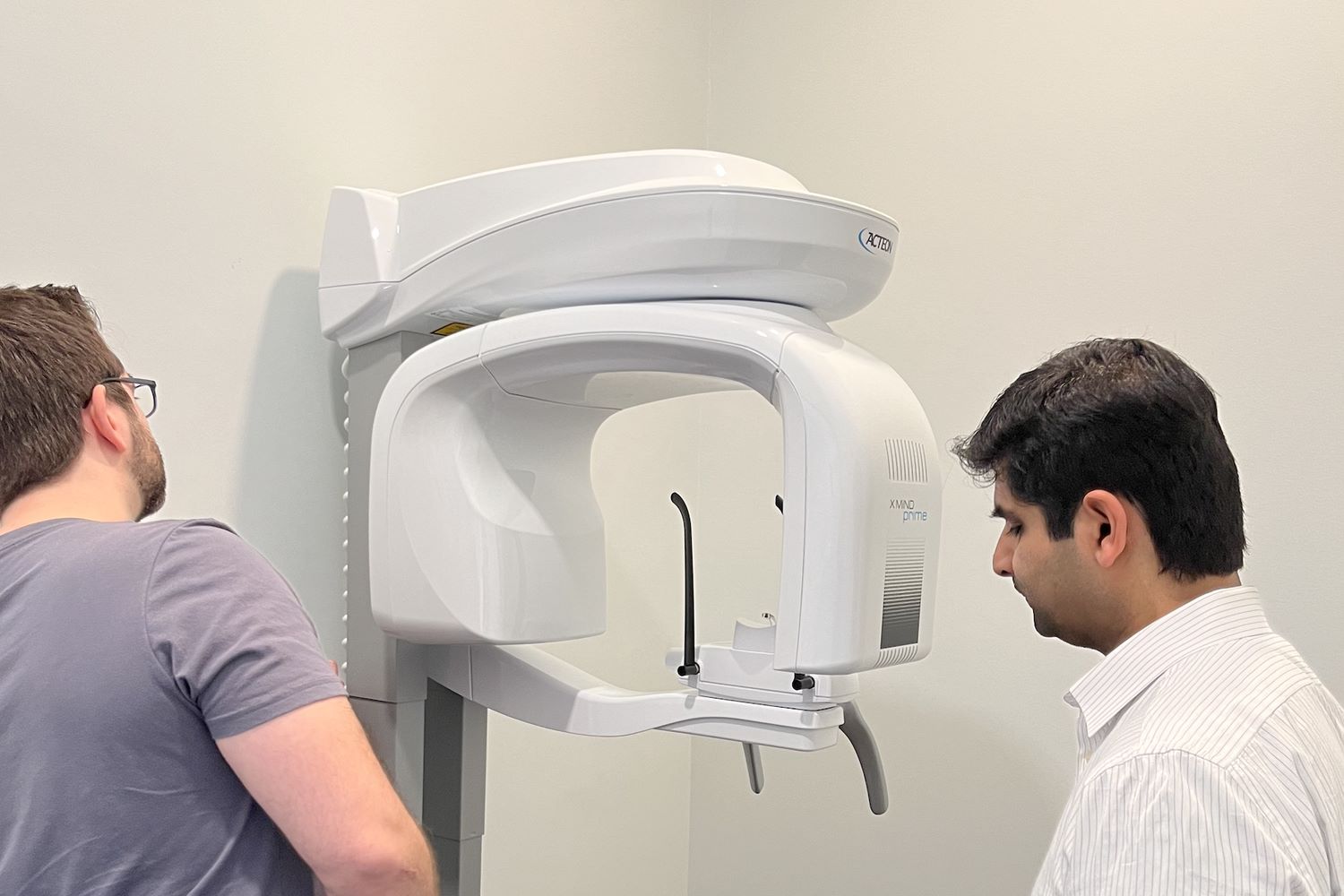
Dental practices are capital-intensive businesses. Chairs, imaging equipment, scanners, computers, technology, and other qualifying equipment can create significant tax-planning opportunities.
For 2026, the maximum Section 179 deduction is $2,560,000, with the deduction beginning to phase out when total Section 179 property placed in service during the year exceeds $4,090,000.
That is a substantial increase from the limits available when this article was originally published.
Even more importantly, recent tax legislation restored 100% bonus depreciation for certain qualifying property acquired after January 19, 2025, subject to the applicable rules. Different rules can apply to property acquired before that date.
Tip: Don't buy equipment solely to create a tax deduction. Spending $100,000 to save a fraction of that amount in taxes still means you've spent real cash. Start with what the practice actually needs, then determine the most tax-efficient way to purchase and depreciate it.
Equipment generally must also be placed in service by year-end - not simply ordered or paid for - to generate the applicable 2026 depreciation deduction.
5. Revisit Your Pass-Through Entity Tax Election
Pass-Through Entity (PTE) tax elections remain an important planning consideration for owners of S corporations and partnerships in states that offer them.
Historically, these elections became particularly valuable because the Tax Cuts and Jobs Act limited an individual's federal deduction for state and local taxes, commonly known as the SALT deduction, to $10,000.
The landscape has changed.
For 2026, the individual SALT deduction limit is $40,400 for most filers ($20,200 for married taxpayers filing separately). The deduction begins to phase down for taxpayers with modified AGI above $505,000 ($252,500 if married filing separately), although it generally won't fall below $10,000/$5,000.
That doesn't mean PTE elections are no longer valuable. It means the analysis is more nuanced.
Depending on your income, state, entity structure, and other deductions, having the dental practice pay state income tax at the entity level may still create a valuable federal deduction while generating a corresponding state-level credit for the owner.
Tip: Don't automatically make - or skip - a PTE election simply because it worked in prior years. The higher SALT limit means your CPA should model the benefit specifically for 2026 before year-end deadlines.
Conclusion: Don't Wait Until Tax Season to Start Tax Planning
Tax preparation tells you what happened.
Tax planning gives you an opportunity to change what happens.
Before December 31, dental practice owners should review equipment purchases, charitable giving, PTE elections, business expenses, retirement planning, and other available strategies with their tax advisor.
The goal shouldn't simply be to generate deductions. The goal should be to make good financial decisions that also produce the most tax-efficient outcome.
Tax laws are complex, and every practice owner's situation is different. Work with your CPA or tax professional before implementing any of these strategies.
At Duckett Ladd, we help dental practice owners proactively plan and project their taxes rather than waiting until tax season to find out what they owe.
Don't wait until the last minute - make your year-end tax plan now and finish 2026 strong.

AI-powered equipment procurement.


© Copyright 2026 GroupUps. All rights reserved.